| |
Hydraulics |
 |
Master Cylinder
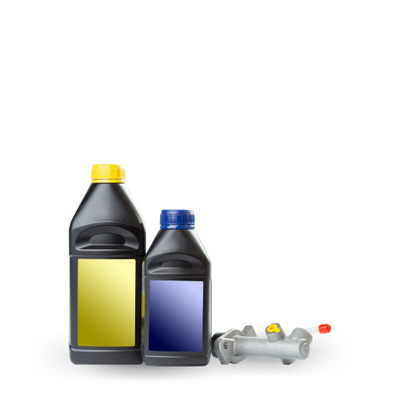
When pressure is applied to the brake pedal, the master cylinder creates hydraulic pressure which pushes brake fluid to the wheel brakes. |
| |
 |
 |
Brake Lines and Hoses
Steel brake lines and high pressure rubber hoses are the avenues through which the pressurized brake fluid travels. |
| |
 |
 |
Wheel Cylinders and Calipers
These are the hydraulic cylinders that apply pressure to the friction materials, causing your car to stop. |
| |
 |
| |
Friction Materials |
 |
Disc Brake Pads and Drum Brake Shoes These brake linings are composed of high temperature materials that create the friction that stops your car. |
| |
 |
| |
Types of Brakes |
|
Disc Brakes These brake linings are composed of high temperature materials that create the friction that stops your car. |
| |
 |
|
Drum Brakes Drum brakes consist of a Brake Drum attached to the wheel, a Wheel Cylinder, Brake Shoes and Brake Return Springs. Hydraulic pressure from the Master Cylinder causes the Wheel Cylinder to press the Brake Shoes against the Brake Drum. This creates friction between the shoes and drum to slow or stop your car. |
| |
 |
|
Parking Brake
The Parking Brake uses Cables to mechanically apply the brakes (usually the rear brake.) This is used to prevent the car from rolling when not being driven. |
| |
 |
| |
Anti-Lock Brakes: A System Built For Safety |
|
Computer-controlled anti-lock braking systems (ABS) are a recently developed safety feature. When sudden stops are made, the ABS prevents wheel lock-up. The system is comprised of wheel-speed sensors that monitor wheel rotation, computer-controlled hydraulics that pulse the brakes on and off rapidly, and the on-board computer. |